

01 / Cultural Brief & Heritage Vision
Our Arabic heritage design process begins with a cultural brief — a deeper exploration than a standard interior design consultation. We take time to understand your relationship to Arabic and Islamic design heritage: the family traditions, cultural touchstones, regional references, and personal memories that inform your vision. We also explore the contemporary lifestyle context: how formal or informal the majlis will be used, how the heritage elements will coexist with the rest of the interior's design language, and what feeling you want guests to experience when they enter the space. This cultural brief shapes every decision that follows.

02 / Heritage Concept Development
With the cultural brief established, our design team develops a heritage concept — a curated selection of Arabic and Islamic design elements, each chosen for its cultural authenticity, aesthetic quality, and relevance to the specific space and client. We present the concept through mood boards, precedent imagery, material samples, and 3D visualisations that show how each heritage element will read in the context of the overall interior. The concept is developed iteratively until every element feels both culturally resonant and spatially resolved.

03 / Artisan Commissioning & Production
Heritage design requires heritage craft — and that means commissioning specialist artisans who carry the traditions of Arabic and Islamic making. Worood Interiors works with a trusted network of master calligraphers, geometric tile cutters, wood carvers, plasterwork artisans, brass workers, and textile makers — sourced from the UAE, the wider Arab world, and internationally — whose skills bring authentic craft quality to every heritage element we specify. Each commissioned piece is reviewed at production stage and approved by the client before installation.

04 / Integration, Installation & Styling
The final phase integrates every heritage element into the completed interior — ensuring that carved screens, calligraphy panels, geometric tilework, and traditional textiles are installed with the precision and care their craftsmanship deserves, and that they read as integral parts of the interior rather than added decorations. Our styling team then completes the space with carefully chosen accessories, lanterns, cushions, ceramics, and botanical elements that enrich the heritage atmosphere without overcrowding it — achieving the balance between cultural richness and contemporary calm that defines the best Arabic heritage interiors being created in the UAE today.

Majlis Design
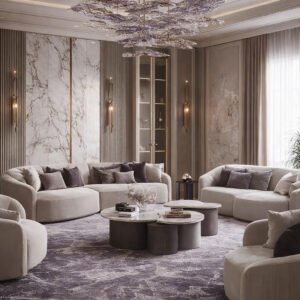
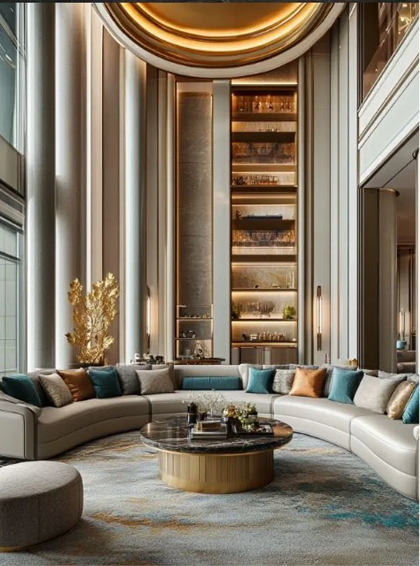
The majlis is the soul of the traditional Arab home — a space of welcome, generosity, and cultural expression that remains deeply relevant in UAE family life today. Worood Interiors designs both traditional formal majlis and contemporary heritage majlis spaces: seating configurations informed by traditional layouts, proportions that communicate welcome and social equality, and details — carved timber, geometric pattern, rich textile, hand-crafted lantern lighting — that anchor the space in its cultural context. In 2026, the most sought-after majlis in Dubai and Abu Dhabi balance traditional hospitality principles with modern comfort and refined contemporary aesthetics. This is our speciality.

Arabic Calligraphy & Art Installations
Arabic calligraphy is one of the highest art forms in the Islamic world — a tradition in which the written word becomes simultaneously linguistic, visual, and spiritual. Worood Interiors commissions and integrates bespoke Arabic calligraphy works into interior spaces: carved into stone or timber feature walls, rendered in brushed metal or gold leaf, painted directly onto surfaces by master calligraphers, or fabricated as three-dimensional sculptural installations. We work with the client to select verses, phrases, and their visual rendering — ensuring the work is linguistically authentic, aesthetically resolved, and personally meaningful.
Geometric Pattern — Tilework, Screens & Ceiling Treatments
Islamic geometric pattern — the complex, mathematically precise repeat patterns found in the tilework, stucco, woodwork, and metalwork of mosques, palaces, and homes across the Arab world — is one of the most distinctive and powerful elements available to a heritage interior designer. Worood Interiors applies geometric pattern across a range of media and scales: hand-laid ceramic and stone tilework in traditional arabesque patterns, laser-cut metal screens and railings, carved wood panels and mashrabiya elements, and geometric ceiling treatments that reference the muqarnas and painted dome traditions of Islamic architecture.
Mashrabiya Screens & Privacy Elements
The mashrabiya — the traditional Arabic latticed wooden screen that filters light, ensures privacy, and creates the dappled shadow play so central to Arabic spatial experience — is one of the most versatile and beautiful elements available in contemporary Arabic interior design. Worood Interiors produces custom mashrabiya-inspired screens in traditional turned wood, laser-cut metal, and contemporary hybrid materials — used as room dividers, window treatments, staircase balustrades, feature walls, and external privacy screens. Each is designed as an integral part of the interior rather than an ornamental afterthought.

Heritage Materials — Stone, Timber, Textile & Metal
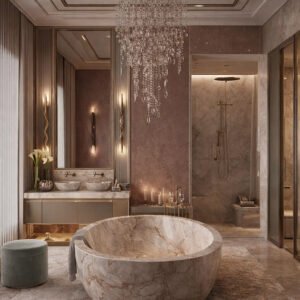
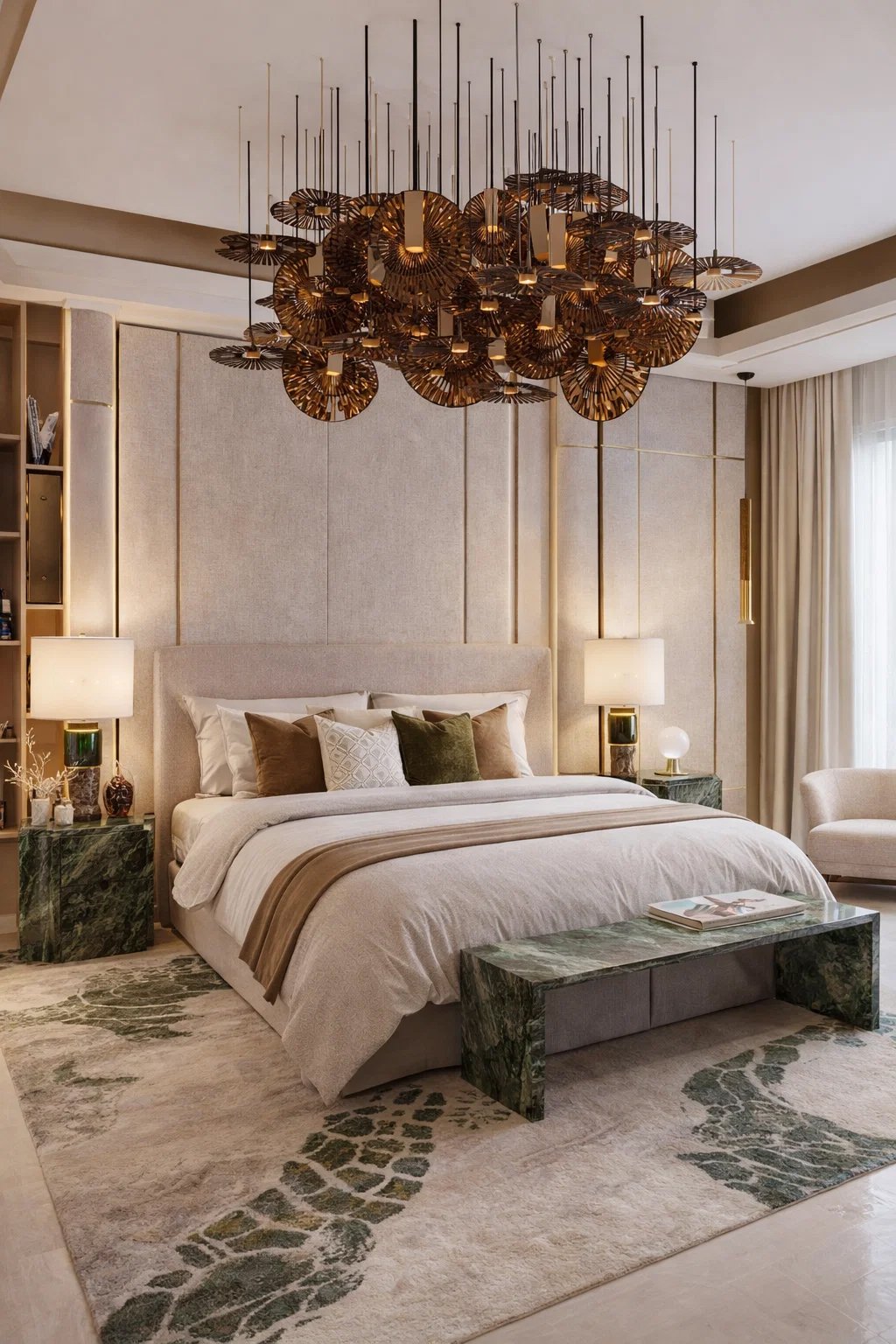
Great Arabic heritage design is expressed as much through material as through form. Worood Interiors specifies and sources the materials that give authentic heritage interiors their warmth and resonance: marble from the Arab world and Mediterranean, aged limestone and travertine, hand-knotted Arabic and Persian rugs, hand-embroidered textiles in traditional geometric and floral patterns, unlacquered brass and hand-beaten copper, reclaimed timber with visible craft marks, and decorative plasterwork in traditional arabesque motifs. Every material is chosen for its cultural authenticity as much as its aesthetic quality.
Contemporary Arabic Furniture Design
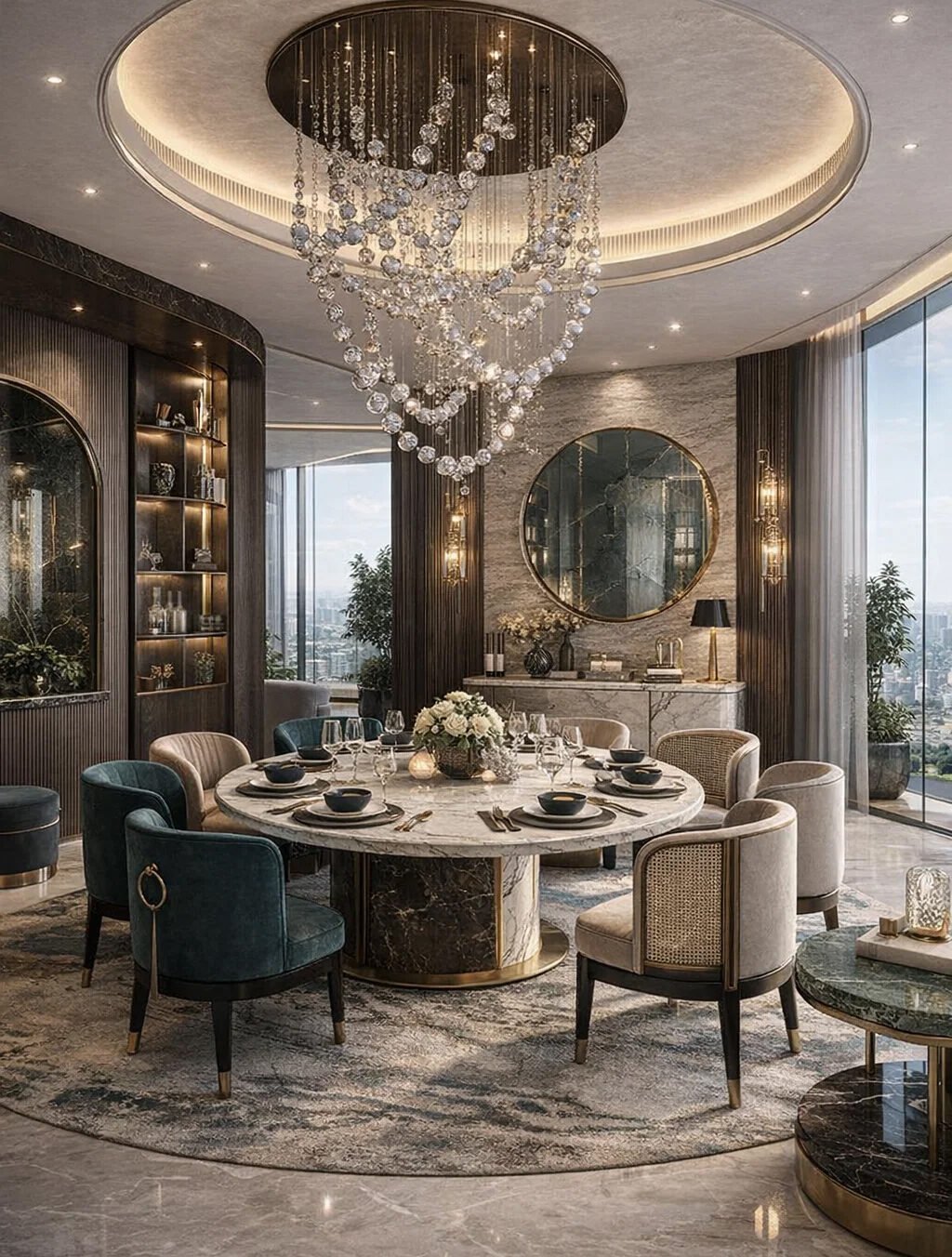
Furniture in a heritage interior must honour the scale, proportion, and material quality of the tradition — while meeting the comfort and functional standards of contemporary living. Worood Interiors designs and commissions custom furniture for Arabic heritage interiors: seating designed around traditional floor-level and low-platform Arabic proportions, adapted for modern comfort; carved timber side tables and occasional pieces in traditional Moroccan, Levantine, and Gulf styles; and contemporary pieces designed with Arabic aesthetic principles — geometric motif, arch form, material richness — expressed in a distinctly modern visual language.